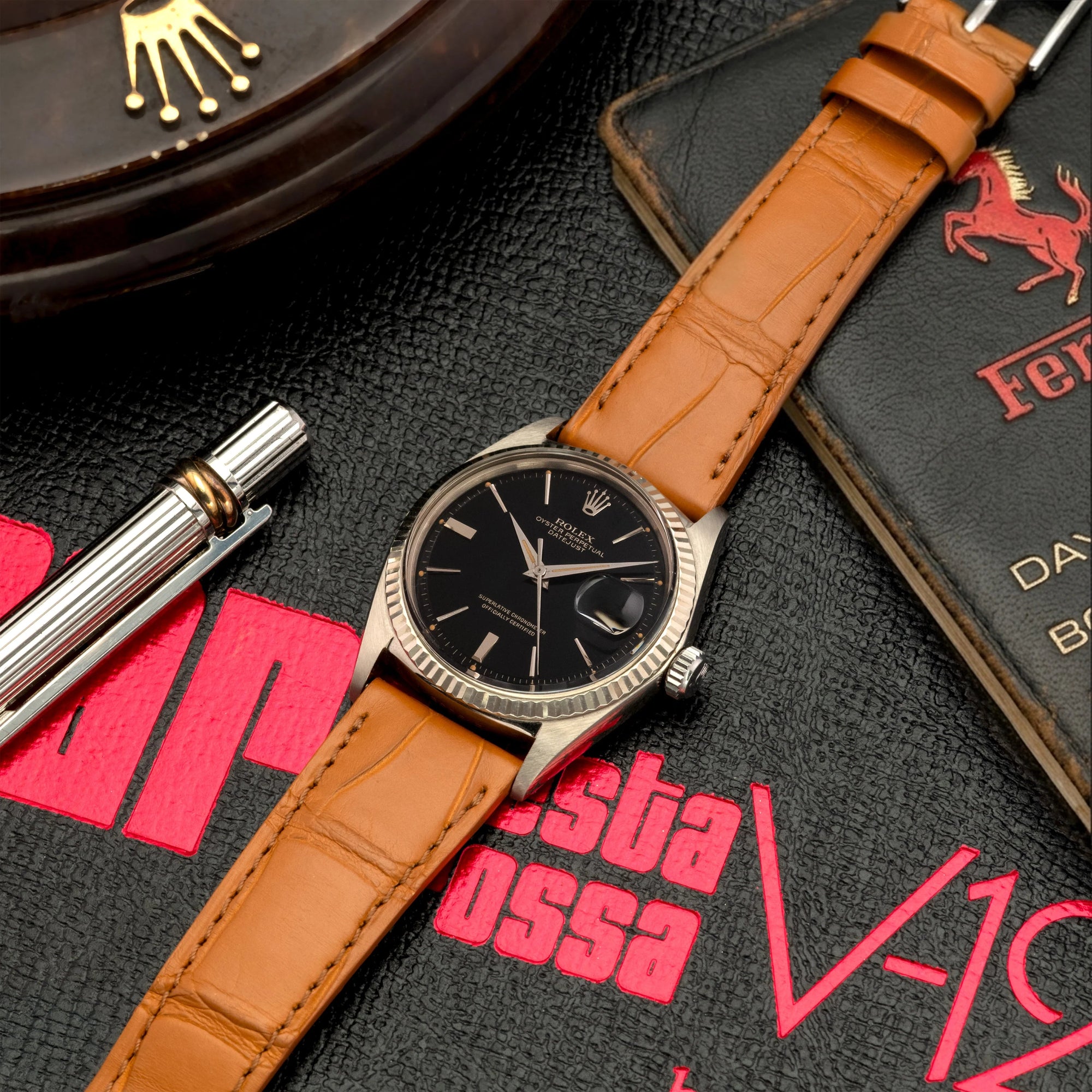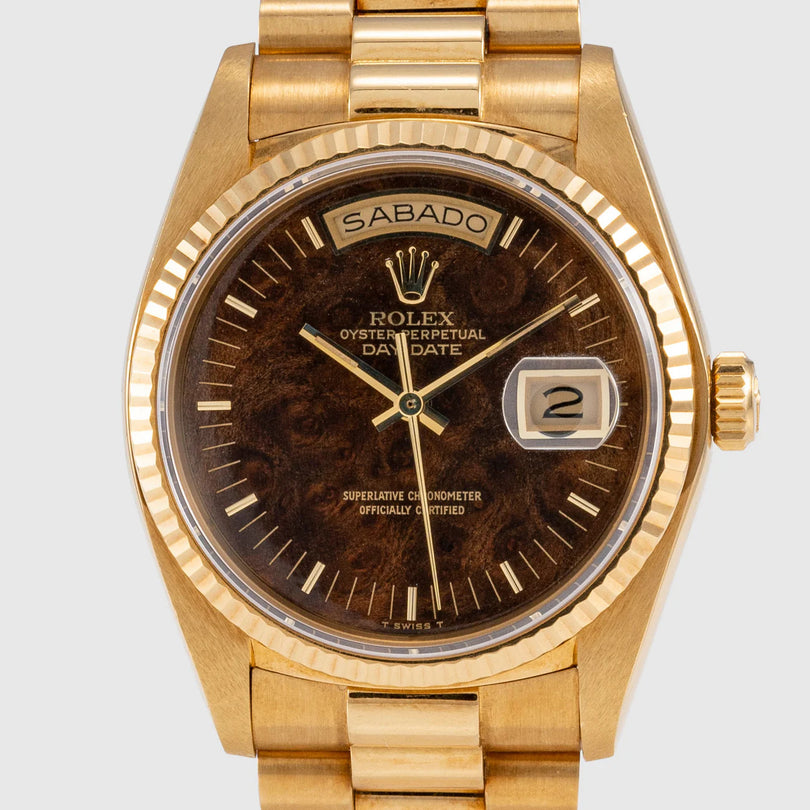
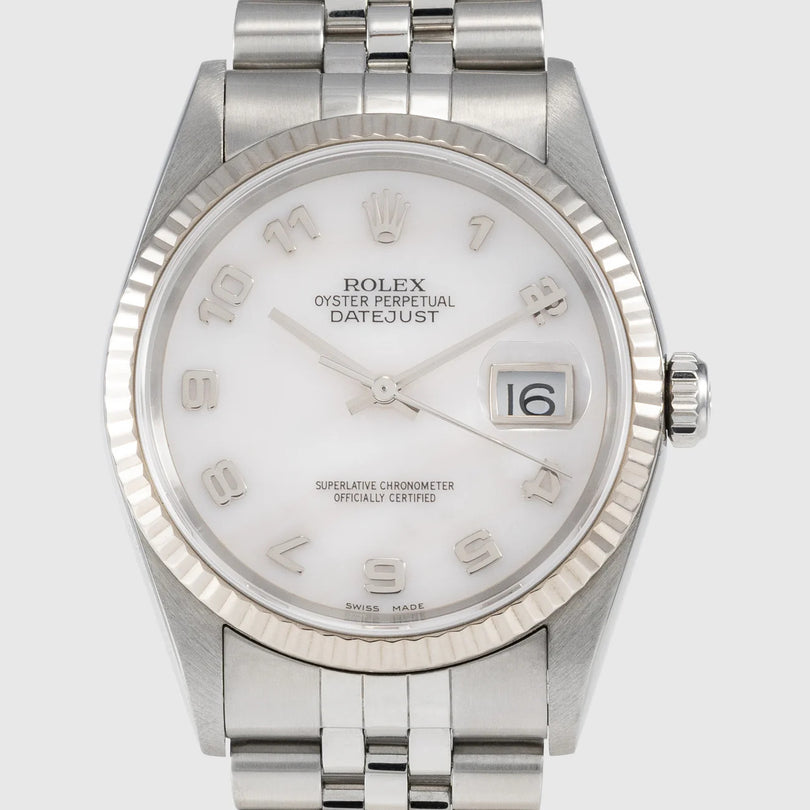
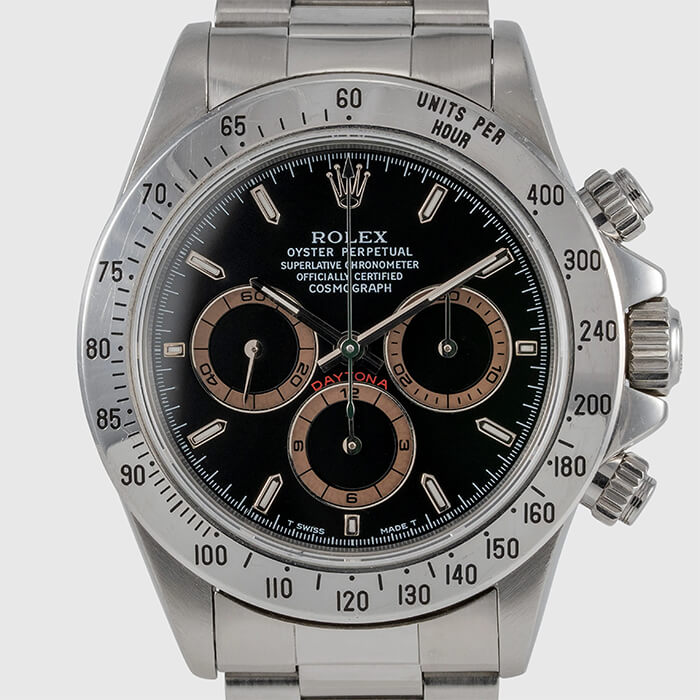
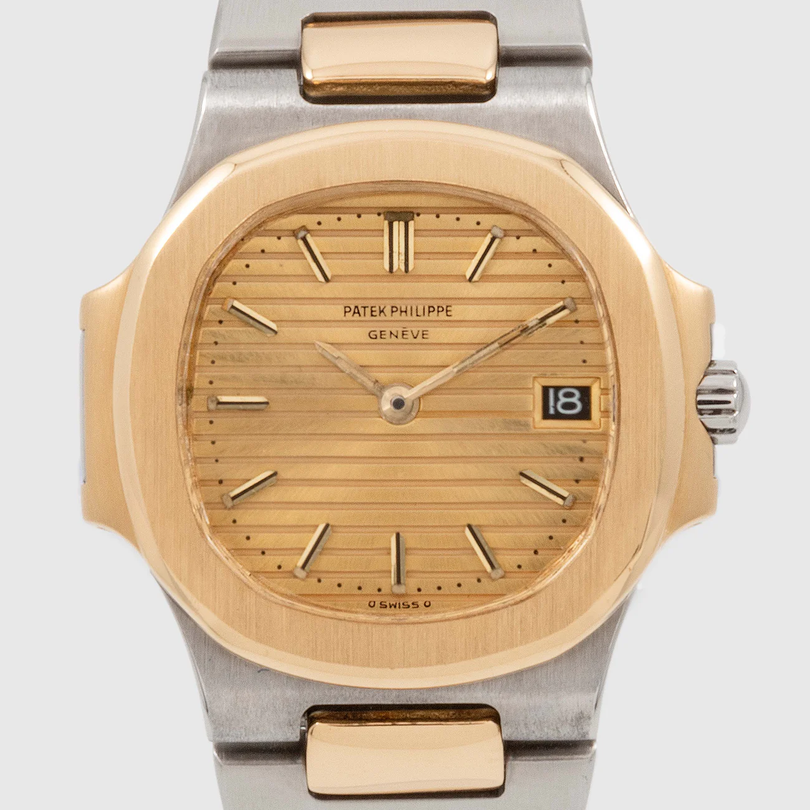
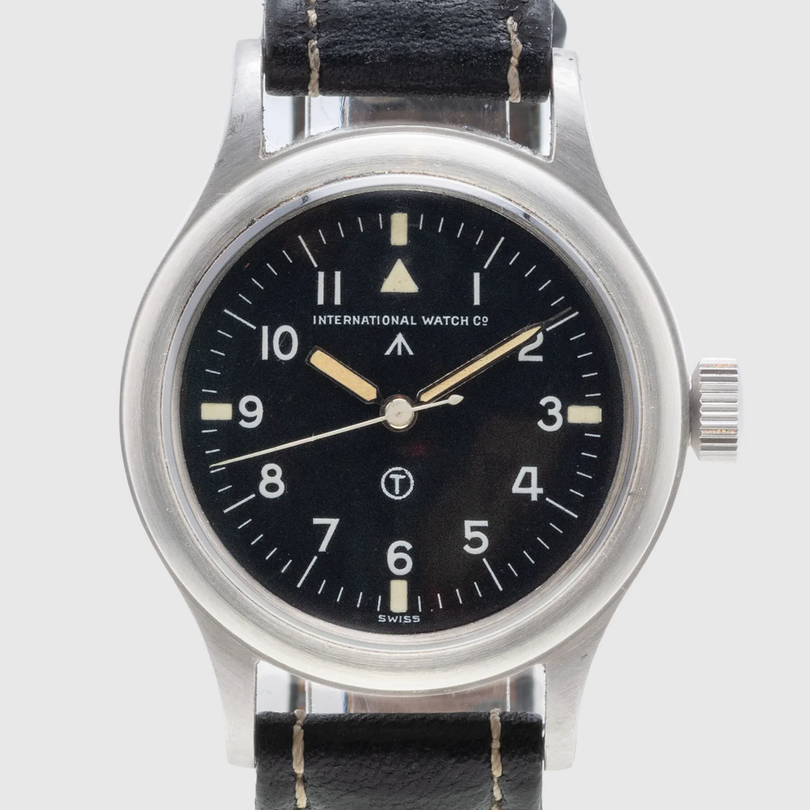
When the name below Rolex tells another story.
Today, the idea of another company printing its name on a Rolex dial feels almost impossible. Imagine walking into Cartier and buying a Rolex with Cartier printed across the dial, or visiting a prestigious jeweler in Caracas, Zurich or Milan and receiving a watch carrying both names.
By modern standards it sounds strange, but for much of the twentieth century this was simply part of how the luxury watch business worked.

(Image: www.phillips.com)
Before Rolex boutiques appeared around the world, watch manufacturers relied heavily on prestigious local jewelers to represent them. In many cities these retailers had been serving wealthy families for generations and sometimes enjoyed more local recognition than the Swiss brands they carried.
Their names mattered, and occasionally those names made their way directly onto the dial. Tiffany & Co. in New York, Serpico y Laino in Caracas, Beyer in Zurich, Joyería Riviera in Havana, Bucherer and Gübelin in Switzerland, Gobbi and Ronchi in Italy, and even Cartier and Van Cleef & Arpels all became part of this unusual chapter in Rolex history.

(Image: www.phillips.com)
Today we call them double signed, co signed or retailer signed watches. The additional name might occupy only a few millimeters of space, yet it can completely change the history, rarity and collectability of the watch.
Before the Rolex boutique
To understand double signed watches, it helps to forget the modern luxury industry for a moment. During the first half of the twentieth century, buying a Swiss watch usually meant visiting a trusted local jeweler rather than a boutique operated directly by the manufacturer.
These stores imported watches, maintained them, introduced new models to clients and often handled the relationship with the manufacturer itself.

(Image: www.christies.com)
A wealthy customer in Caracas might trust Serpico y Laino. In Zurich, Beyer. In New York, Tiffany & Co. In Milan, names such as Gobbi, Ronchi or Verga carried their own prestige. For a Swiss manufacturer expanding internationally, placing watches with the right retailer was therefore essential.
Allowing selected retailers to add their own name to the dial made perfect sense. It reassured the local client and celebrated the relationship between manufacturer and seller at the same time.

(Image: Bobs Watches on Instagram)
Double signed watches became particularly visible during the first half of the twentieth century and continued through the postwar decades.
By the 1990s, the practice had largely disappeared as manufacturers began exercising much tighter control over distribution, boutiques and global brand dentity. That alone makes these watches fascinating today. They belong to a retail world that has almost completely disappeared.
How the second signature was added
There was no single universal method used for retailer signatures. In many cases, Rolex supplied a finished watch or dial and the authorised retailer added its own name locally before delivery to the customer. In other situations, the process appears to have been coordinated more closely with the manufacturer.

This explains why the font, position and execution of retailer signatures can vary considerably. A name might appear underneath the Rolex signature, above the text at six o’clock or in another part of the dial entirely. On some watches the retailer is very prominent. On others, it is so discreet that you almost miss it.

Our 1973 Air King reference 5500 signed Cartier, for example, carries a standalone Cartier signature above six o’clock on an otherwise beautifully simple matte black dial. The second signature does not disturb the architecture of the watch, yet once you notice it, it becomes almost impossible to look anywhere else.

(Image: www.phillips.com)
One extraordinary Daytona produced around 1991 for Van Cleef & Arpels gives us unusually strong insight into how this process worked. The yellow gold reference 16518 carries the initials “V.C.&A.” on the dial and survived with its original documentation confirming that Van Cleef & Arpels applied the signature in its own atelier with Rolex’s authorisation.

(Image: www.phillips.com)
That is particularly important because it proves something collectors often debate. A retailer applied signature did not necessarily have to leave the Rolex factory already printed on the dial to be completely legitimate.
Tiffany & Co. and the American Rolex
For many collectors, Tiffany & Co. is the first name that comes to mind when discussing double signed Rolex. The relationship between Rolex and Tiffany lasted approximately from the mid 1950s until the early 1990s, although only a fraction of the Rolex watches sold through Tiffany received the additional signature.
That relatively limited production is exactly why genuine surviving examples are so desirable today.

What makes Tiffany particularly fascinating is the sheer variety of Rolex models on which the name has appeared. There are relatively simple Oyster Perpetuals and Datejusts, but also Explorers, GMT Masters, Sea Dwellers, Day Dates and some extremely important Daytonas.

(Image: www.phillips.com)
One particularly extraordinary example is a 1968 Daytona reference 6239 fitted with both a Tiffany & Co. signature and an exotic Paul Newman dial. At the time it surfaced publicly, it was considered the only known steel reference 6239 combining these two traits. At the opposite end of the Rolex family, we have handled several Tiffany signed Day Dates
ourselves.

One particularly attractive example is our 1979 reference 18038, combining yellow gold with a matte white dial, applied Roman numerals and the Tiffany & Co. signature. Without the retailer name it is already an unusual Day Date dial. With Tiffany printed across it, the watch gains another layer of character and provenance.

We have also handled a later 1986 reference 18038 with a silver sunburst dial, Roman quarters and Tiffany signature. Again, the mechanical watch remains exactly the same. What changes is the context. Then there are configurations that exist in truly tiny numbers. Yellow gold GMT Masters with brown dials and Tiffany signatures are known only in a handful of examples.

(Image: www.christies.com)
The reference itself may be familiar, but changing the metal, dial and retailer signature transforms it into something completely different. This is where double signed collecting becomes addictive. You stop collecting references and start collecting combinations.
Serpico y Laino and the Caracas years
If Tiffany represents the American side of the story, Serpico y Laino takes us somewhere completely different. The retailer was founded in Venezuela by Italian immigrants Vicente Laino and Leopoldo Serpico around the late 1920s. It expanded into watches during the early 1930s and eventually became Rolex’s exclusive distributor in Venezuela, while also representing other major Swiss manufacturers.

(Image: italianwatchspotter.com)
Its rise coincided with an extraordinary period in Venezuelan history. Oil transformed the country into one of Latin America’s wealthiest markets and created a sophisticated clientele with an appetite for exceptional watches.

(Image: www.windvintage.com)
The surviving Serpico y Laino Rolexes reflect that perfectly. The signature appears on early Bubblebacks, Datejusts, chronographs, Submariners and GMT Masters. One remarkable reference 6542 GMT Master from 1958 combines an 18 karat yellow gold case, bakelite bezel and Serpico y Laino signature. Steel examples are also known, often accompanied by the characteristic S&L engraving on the caseback.

(Photo: www.everywatch.com)
There are early Submariners too, including references 5512 and 5513, while the relationship stretches even further back into Rolex history. A stainless steel reference 4537 chronograph from around 1946, one of Rolex’s extremely early Oyster chronographs, survives with a Serpico y Laino signed silver dial.

We have handled our own share of Serpico y Laino pieces at Momentum. One of our favourites is a 1961 Datejust reference 1602. Even without the retailer signature the watch is anything but ordinary, with a yellow gold case carrying beautifully preserved Morellis decoration across the bezel and lugs, matched by an extraordinary tile style bracelet.

Then you reach the silver dial and see Serpico y Laino. At that point the watch stops being simply a rare Datejust configuration and becomes an object directly connected to Caracas and one of the most important luxury retailers in South American watch history. That is what a good retailer signature does. It gives geography to the watch.
Joyería Riviera and old Havana
Some names simply sound romantic on a vintage dial, and Joyería Riviera is one of them. The retailer operated in Havana before the Cuban Revolution and later continued its business in Puerto Rico. Rolex watches carrying the Riviera name survive in extremely small numbers, and some of them are remarkable.

(Image: www.phillips.com)
A 1962 Explorer reference 5500 is one of the best examples. The watch already has an unusual gilt 3, 6, 9 Explorer layout inside the smaller 34 millimeter reference 5500 case. Add the Joyería Riviera signature at six o’clock and the configuration becomes significantly rarer.

(Image: www.phillips.com)
Looking even closer reveals another period detail. The dial carries the small luminous “exclamation mark” associated with Rolex’s transition toward lower radium content during this period. Then there is a Joyería Riviera signed reference 6036 triple calendar chronograph, one of the complicated vintage Rolex watches commonly associated with the Jean Claude Killy family.
These are the watches that make retailer signed ncollecting so fascinating. The second signature does not always have to be the main attraction. Sometimes it is the final layer on an already extraordinary watch.
Beyer, Zurich
Move from Havana to Zurich and the atmosphere changes completely. Beyer Chronometrie, founded in 1760, is one of Switzerland’s most important historic watch retailers. Its name appears on watches from several great Swiss manufacturers, Rolex included.
We have handled a particularly interesting example ourselves, a 1962 Oyster Perpetual Date reference 1500 in 18 karat gold with a tropical dial and Beyer double signature.

This combination illustrates something important about the category. The retailer signature alone does not automatically make a watch great. The strongest double signed watches tend to be interesting even before you notice the second name.

A special dial, strong condition, an unusual case or an attractive configuration gives the watch its foundation, while the retailer signature adds provenance and scarcity. Earlier Beyer signed Rolexes can be traced back into the prewar and immediate postwar period, demonstrating how long these retailer relationships could last.
Beyond Tiffany and Serpico: a world of great retailers
Tiffany & Co., Serpico y Laino and Beyer are only part of the story. During the twentieth century, some of the most prestigious jewelers in Europe and beyond acted as the bridge between Swiss manufacturers and their local clientele.

(Image: www.hairspring.com)
Names such as Gübelin, Hausmann, Gobbi, Ronchi, Bucherer, Verga, Trucchi and Asprey all belonged to this world. Not every retailer appears with the same frequency on Rolex. Some are extraordinarily well documented on Rolex dials, while others are encountered more frequently on Patek Philippe, Vacheron Constantin or Audemars Piguet.

(Image: www.phillips.com)
What connects them is the enormous importance retailers once had. These stores were not simply places to buy a watch. They were institutions, often family businesses with generations of clients, their own watchmakers and reputations powerful enough for manufacturers to allow their names to share the dial.
Gübelin, based in Lucerne, belongs to the small circle of great Swiss retailers whose signatures appear on watches from some of Switzerland’s most important manufacturers. Alongside Beyer and Bucherer, Gübelin represents a period when the retailer itself could be almost as important to the local customer as the manufacturer whose watch sat in the window. Italy produced an equally fascinating network.

(Image: www.everywatch.com)
Gobbi Milano, founded in the nineteenth century, became one of the country’s most important names in watches and jewellery. Its relationship with Rolex goes back surprisingly far. One particularly unusual example is a tiny stainless steel Rolex reference 2303 from 1936, produced for Gobbi Milano.
The watch is a single button chronograph measuring only around 30 millimeters, making it an already fascinating object before the retailer connection is even considered. Then there is Ronchi Milano, another name that immediately places a watch within the Italian market.
We currently have a beautiful example at Momentum, a 1955 Rolex Chronomètre Metropolitan reference 4325 in 18 karat yellow gold. It is already an unusual Rolex, with a 35 millimeter case, stepped bezel, manually wound movement and period gold bracelet.
The champagne dial carries silvered Roman quarters and, above the centre, the additional Ronchi Milano signature. It is a perfect example of why we enjoy these watches so much.

(Image: www.italianwatchspotter.com)
The retailer name does not dominate the design. It simply gives an already unusual Rolex a very specific Italian identity. Rome had its own great institution in Hausmann & Co., one of the city’s historic names in high watchmaking.
Hausmann developed long standing relationships with the leading Swiss manufacturers, Rolex included, and remains associated with the brand today. Its history is another reminder of how central the great Italian retailers were in establishing Swiss watchmaking among local clientele.

(Image: www.antiquorum.swiss)
Bucherer represents another major chapter in Swiss watch retailing. Its name appears on some particularly attractive early Rolex chronographs, including examples of the reference 2508 from the late 1930s and early 1940s. These watches offer a very different picture of Rolex from the sports watch dominated image most collectors know today and remind us just how broad the company’s catalogue once was.
Asprey, Oman and a different kind of retailer relationship
And then we arrive in London, where Asprey deserves a category almost of its own. Asprey’s relationship with Rolex is slightly different from the classic Tiffany formula. On many of the most important Asprey retailed Rolexes, you do not actually see the word Asprey printed on the dial.

(Image: www.windvintage.com)
Instead, Asprey acted as an intermediary for some of the most extraordinary special commissions Rolex ever produced, particularly for Sultan Qaboos bin Said Al Said of Oman. During the early 1970s, Asprey’s long standing relationships with Middle Eastern royalty effectively made it a bridge between the Sultanate and some of Switzerland’s most important manufacturers.
Rolex watches ordered through Asprey could receive the Omani Khanjar, the crossed dagger national emblem, or even Sultan Qaboos’s signature directly on the dial.

(Image: www.windvintage.com)
The Asprey name itself was often engraved on the caseback, providing another crucial piece of provenance. Some of these watches are among the most important Middle Eastern Rolexes in existence. There are Sea Dweller reference 1665s with red Khanjar or Qaboos dials, Day Dates, Datejusts and exceptionally rare Daytonas.
There are equally fascinating dressier examples. Day Date reference 1803 watches are known with red Omani Khanjar dials and Asprey provenance, while other examples combine Stella lacquer dials with Omani emblems and special commissions.

(Image: www.amsterdamvintagewatches.com)
Asprey therefore helps us understand that the retailer’s role could go much further than simply adding a second name to a finished dial. The retailer might coordinate the entire special order, liaise with the manufacturer, arrange the dial modification, engrave the case and finally deliver the watch to the client. In this world, the retailer was not simply the seller. It was part of the creation of the watch itself.
Cartier selling Rolex?
For part of the twentieth century, Cartier’s American business operated separately from its European organisation. This gave the New York store considerable freedom to sell watches from other manufacturers, including Rolex, Patek Philippe and Audemars Piguet.

Only after Cartier’s international operations were reunited did this unusual arrangement disappear. Which brings us to our 1973 Rolex Air King reference 5500. At first glance, it is exactly what you expect from a vintage Air King. A 34 millimeter Oyster case, smooth bezel, matte black dial and simple baton indexes create one of the cleanest Rolex designs of the period.

Then you look above six o’clock and see Cartier. Two of the most famous names in luxury sharing one extremely understated Rolex dial should almost look wrong, yet somehow it works perfectly. Cartier signed Rolexes are among the least commonly encountered retailer signed configurations and represent a particularly curious moment in the history of both brands.
A genuinely international story
Once you begin researching retailer signed watches, the list becomes surprisingly international. Switzerland gives us Beyer, Bucherer and Gübelin. Italy contributes names such as Ronchi, Gobbi, Verga, Hausmann and Trucchi.
South America and the Caribbean bring Serpico y Laino, Freccero, Joyería Riviera and Cuervo y Sobrinos. The United States gives us Tiffany & Co., Cartier New York and Van Cleef & Arpels, while Asprey connects London with some of the most important Middle Eastern commissions ever produced.

Important retailers also existed in Rio de Janeiro, Nairobi, Singapore, India, Australia and many other markets. Not every name appears with the same frequency on Rolex, and some retailers are better documented with other manufacturers, but together they show how international the twentieth century luxury watch trade already was.
Long before social media, online marketplaces and international monobrand boutiques, these watches were already travelling across the world. The retailer signature tells us where part of that journey took place.
Why authentication matters so much
There is, of course, another side to this story. Adding a second name to a dial is not particularly complicated. Adding the right second name, in the right font, in the right position and making everything look sixty years old is considerably more difficult, but clearly not impossible.

Because a genuine Tiffany, Cartier or Serpico y Laino signature can significantly increase the desirability and value of a watch, the incentive to fake them has always existed. This is why a retailer signature should never be authenticated in isolation. We look at the entire watch.

The production date needs to make sense for the retailer relationship. The positioning and typography should correspond with known examples. The ink should sit naturally on the surface. The dial itself needs to be original. On certain Serpico y Laino watches, corresponding S&L caseback engravings can provide additional evidence. Original guarantees, invoices or retailer paperwork can become enormously important.

Serial numbers matter too. Finding another watch close in production with the same retailer treatment can help establish patterns that might otherwise be invisible. Sometimes one small piece of paper is more valuable than everything printed on the dial. With double signed watches, provenance is not simply a nice extra. It can be the difference between fascinating and frightening.
Why collectors care
If you remove the retailer name, the watch continues to function exactly the same way. A Tiffany Daytona does not run better than a normal Daytona, just as a Serpico GMT does not know it once lived in Caracas. But vintage collecting has never been only about function. We collect history, context and stories.
A retailer signature tells us that a particular watch travelled through a specific place and commercial network before reaching its original owner. A standard reference suddenly becomes geographically specific.

The watch is no longer simply Swiss. It can also be New York, Caracas, Zurich, Milan, Rome, London, Muscat or Havana. That makes each surviving example a small document of the old luxury trade.
And unlike a modern collaboration created specifically to attract collectors, most of these watches were simply commercial products of their time. Nobody in 1960 was putting Serpico y Laino on a Rolex dial because the imagined collectors would fight over it sixty years later. That is perhaps what makes the scarcity so appealing today.
Why the second name matters
There is a strange contradiction at the heart of double signed Rolex collecting. Rolex spent the twentieth century building one of the most recognisable names in the world, yet some of its most fascinating watches are precisely the ones where it shared the dial. That tiny second signature can reveal who sold the watch, where it was originally delivered and, occasionally, what type of client might have walked through the door to buy it.

A Datejust can become a small piece of Venezuelan history. An Air King can remind us of a period when it was possible to walk into Cartier and leave wearing a Rolex. A Ronchi signed dress watch can transport us to postwar Milan, while an Asprey retailed Khanjar Rolex opens an entirely different chapter involving London, Oman and royal commissions.

(Image: www.sothebys.com)
The signature itself might be tiny, but it gives the watch something collectors spend their entire lives searching for: context. And once you understand that, the bottom half of a vintage Rolex dial suddenly becomes a very interesting place to look.
Disclaimer: The photographs used in this article have not been independently verified and are included solely for illustrative and explanatory purposes.